This website uses cookies to improve your experience. We'll assume you're ok with this, but you can opt-out if you wish. Read More

Architects
Architecture firms, bring your projects to life…
online
Architects
Table of contents
Your architecture site can do much more than just look “pretty.”
Bring my project to life
You rely on your network to find clients?
That works… up to a point. Even the best studios eventually hit a ceiling without online visibility.
Whether you’re an independent architect, an urban planner, or a sustainable renovation specialist, your website should reflect your style, reassure your future clients, and convince them to reach out. At Eazyclick, we turn forgotten portfolios into striking showcases.
What makes an architect website different?
No need to build a cathedral — a good site keeps it simple.
01
A design that mirrors your style
Minimalist, brutalist, organic? Your site should express your signature. Spoiler: 80% of firms go for ultra-minimal looks… leaving you 20% of space to stand out subtly (that’s where we come in).
02
Content that makes people want to call you
Before signing, clients want proof. Showcase your projects with high-quality photos. Talk a bit about yourself too: who you are, your philosophy, and transparency about your project partners.
Key elements of an effective architect website
01
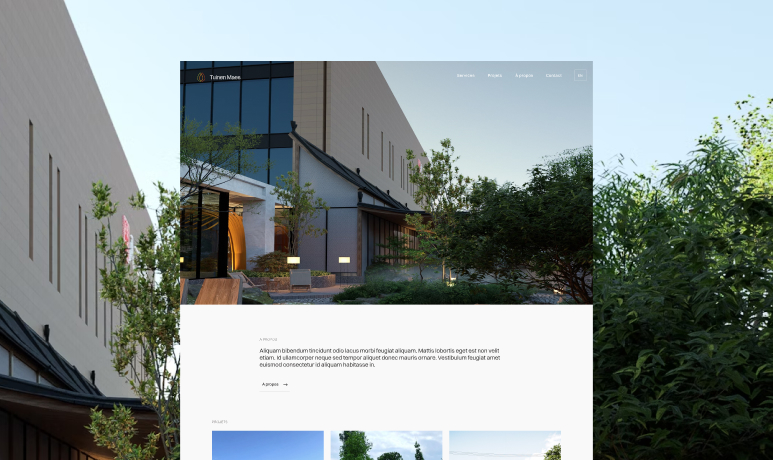
Portfolio / Projects
It’s your storefront. Show your best work:
High-resolution photos and well-framed plans
Clear descriptions
Black-and-white before/after shots
Starting out? Aim for at least three projects to build trust.
02
Your services (no jargon)
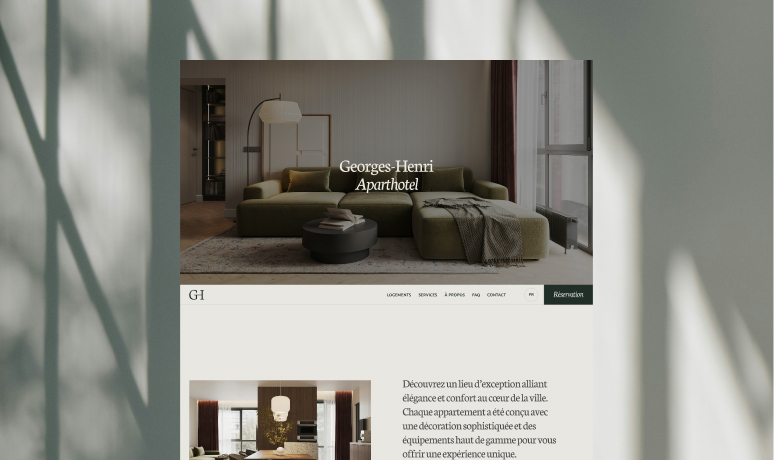
Explain what you offer: design, renovation, etc.
Think from your client’s perspective — they should understand what you do without needing to Google “urban planning permit.”
03
About / Team
People want to know who they’re dealing with. A professional photo, a short, honest bio, your values, and your approach. Be professional but human. Spoiler: readers prefer that you love natural light over hearing about your 2008 diploma.
04
Testimonials / References
Nothing beats social proof. Let your clients speak — their reviews reassure, validate your process, and show you can manage a project smoothly.
05
Clear contact (not buried at the bottom)
A simple form, visible email and phone number, and ideally a booking tool like Calendly. The smoother the process, the higher the conversions.
06
Blog or news (optional but smart)
Write about trends, inspiration, and ongoing projects. It’s good for your image and SEO. It also proves you’re active — even if you love heritage buildings.
How to create your architect website?
Comparison
Option
Freelance/Agency
CMS / No-code (WordPress, Webflow, Squarespace…)
Eazyclick (turnkey)
Budget
Freelance: €2000–3000 / Agency: from €5000
€0–1000 per year (excluding time)
From €499
Time required
Low, but project management needed
High: minimum 30 h from scratch
Low: fully guided
Design customization
Excellent, especially with creative agencies
Moderate: limited without code or paid add-ons
Excellent with Push-up Design
Required skills
None, but must choose wisely
Design, structure, SEO, CMS, technical basics
None: guided by project manager
01
Freelance or agency: tailor-made, but at what cost?
Hiring a freelancer or agency is like commissioning a custom plan — everything is designed for you.
A freelancer (€2000–3000) offers a personalized approach but expect mental load: design, SEO, maintenance… usually handled by one person.
An agency (from €5000, often more) gives you a full team, structured process, and professional follow-up — but at a higher price.
Choose one that understands your field: project presentation, lead management, and presence on Houzz or similar platforms. Otherwise, it’s wasted budget.
02
Build it yourself with a CMS (no coding required)
You can also build your own site using WordPress, Wix, Squarespace, or no-code tools like Webflow or Bubble.
- Tempting for the low cost (€0–1000/year), but note:
-
You’ll need design and structural basics
-
It’s time-consuming — at least 30 hours if you start from scratch
-
Many run into issues: Squarespace has rigid templates and SEO limits
-
It can work if you enjoy tinkering, but realistically, it’s not for everyone.


03
Eazyclick: the truly turnkey solution
Want a site that reflects your identity, without the stress or expense?
With Eazyclick, you start from a smart template and turn it into a site that looks fully custom:
Your colors, logo, and typography integrated from the start
Push-up Design lets you restructure pages, reorder sections, and personalize every detail
A dedicated project manager guides you through every step
A professional, fast, secure site optimized for conversion
From just €399.
You get an entire team’s capability for the price of a freelancer.
Technical aspects no architect website can overlook
01
Security & maintenance
A website isn’t a static model — it lives, evolves, and can crash.
It must be secure (SSL certificate, reliable hosting) and regularly maintained:
Frequent system and plugin updates
Post-update testing
Automatic backups to restore in case of bugs or attacks
Ongoing visibility on Google and ChatGPT
02
Performance design
A slow or poorly displayed site loses visitors in under 3 seconds.
Your site must:
Load in under 2 seconds
Be fully responsive across all devices
Score at least 80 on PageSpeed Insights for speed, stability, and interactivity
03
A solid strategy
An architect website needs a clear business goal:
SEO: rank on searches like “architect renovation Bordeaux.”
Ads & social media: use Instagram bio links, Google Ads, or Pinterest to convert clicks into clients.
External platforms: build authority on Houzz and link back to your projects.
Word of mouth: showcase testimonials and make contact easy.
Your project starts here, don’t hesitate to reach out.
Bring my project to life